
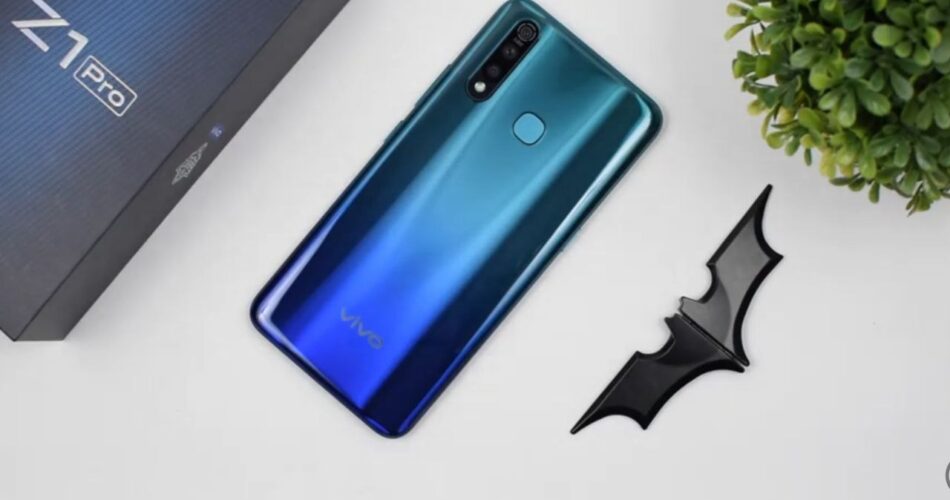
The Vivo Z1 Pro emerged as a strong contender in the budget smartphone segment, delivering a balanced combination of processing power, camera versatility, and long-lasting battery capacity. Designed for everyday users, students, and casual gamers, this device focused on practical performance without premium pricing. In this comprehensive review, we break down the hardware, software, and real-world usability to help you determine if the Vivo Z1 Pro remains a viable option today.
Design and Display
The Vivo Z1 Pro features a 6.3-inch IPS LCD panel with a Full HD+ resolution of 1080 x 2340 pixels. The display delivers a pixel density of approximately 409 PPI, resulting in sharp text and vibrant media playback. The screen-to-body ratio reaches around 90.5 percent, facilitated by a waterdrop notch that houses the front-facing camera.
The chassis is constructed primarily from polycarbonate, keeping the device lightweight at 180 grams. The rear fingerprint sensor is positioned for quick, single-handed access, while the side-mounted volume and power buttons maintain a clean profile. Available color options typically included Sonic Black, Sonic Green, and Sonic Blue, offering a minimalist aesthetic with subtle gradient finishes.
Performance and Gaming
At the core of the Vivo Z1 Pro sits the Qualcomm Snapdragon 712 chipset, an octa-core processor built on a 10nm architecture. Paired with up to 8GB of LPDDR4X RAM and 128GB of internal storage, the phone handles multitasking, social media, and productivity apps with ease. The Adreno 616 GPU provides stable frame rates in popular mobile titles, though users should expect medium settings for graphically intensive games.
Storage expansion is supported via a dedicated microSD card slot, allowing up to 256GB of additional capacity. The UFS 2.1 storage standard ensures faster app launches and smoother file transfers compared to older eMMC alternatives.
Camera System
Photography enthusiasts will find a capable triple-lens arrangement on the rear. The primary 16-megapixel sensor features an f/1.8 aperture and phase-detection autofocus for reliable focus tracking. An 8-megapixel ultra-wide lens captures expansive landscapes, while a 5-megapixel depth sensor assists with portrait mode bokeh effects.
The front camera houses a 32-megapixel sensor, optimized for detailed selfies and video calls. Software enhancements include HDR, night mode, AI scene recognition, and various beauty filters. Video recording tops out at 4K resolution on the rear and 1080p on the front, with electronic image stabilization for smoother footage.
Battery Life and Charging
A 5000mAh battery serves as the Vivo Z1 Pro’s standout feature. Under moderate usage, the device comfortably delivers one and a half to two days of operation. Heavy usage, including continuous navigation, streaming, and gaming, typically drains the battery within a full day.
Charging is handled through an 18W fast charger connected via USB Type-C. A full charge generally takes around two hours. The phone also supports smart power management, including background app optimization and adaptive brightness to extend runtime.
Software and Connectivity
The device launched with Android 9 Pie and Vivo’s Funtouch OS 9, offering a clean interface with gesture navigation and system-wide dark mode. Over-the-air updates have provided security patches and minor feature enhancements, with some regions receiving upgrades to Android 10 or 11 depending on carrier support.
Connectivity options include dual 4G VoLTE, Wi-Fi 802.11 a/b/g/n/ac, Bluetooth 5.0, GPS with GLONASS and BDS, and a 3.5mm headphone jack. The absence of 5G is expected given the device’s release timeline, but 4G LTE remains fully functional for modern networks.
Pros and Cons
Pros:
- Large 5000mAh battery with reliable all-day endurance
- Capable triple rear camera system with ultra-wide support
- Smooth everyday performance from the Snapdragon 712
- Dedicated microSD slot and 3.5mm audio jack
- Fast charging via USB Type-C
Cons:
- Limited to 18W charging speed by modern standards
- No official 5G connectivity
- IPS LCD panel lacks OLED contrast and deep blacks
- Software updates may have slowed in recent years
Should You Buy the Vivo Z1 Pro in 2026?
The Vivo Z1 Pro was engineered as a value-focused smartphone, and its core strengths remain intact for users seeking a dependable secondary device, a student phone, or a budget-friendly option on the refurbished market. While it does not compete with modern flagship processors or advanced camera systems, its battery endurance, stable performance, and practical feature set still deliver consistent utility.
Buyers should verify regional software support, check battery health if purchasing used, and compare current pricing against newer entry-level models. For light users, media consumers, and those prioritizing battery longevity over cutting-edge specs, the Vivo Z1 Pro continues to offer sensible value.
Conclusion
The Vivo Z1 Pro remains a well-rounded budget smartphone that prioritizes real-world usability over flashy specifications. Its combination of a large battery, capable camera array, and reliable mid-range processor makes it a practical choice for everyday tasks. While technology has advanced, the device still holds up as a functional, cost-effective option for users who value stability, battery life, and essential connectivity in a compact package.