
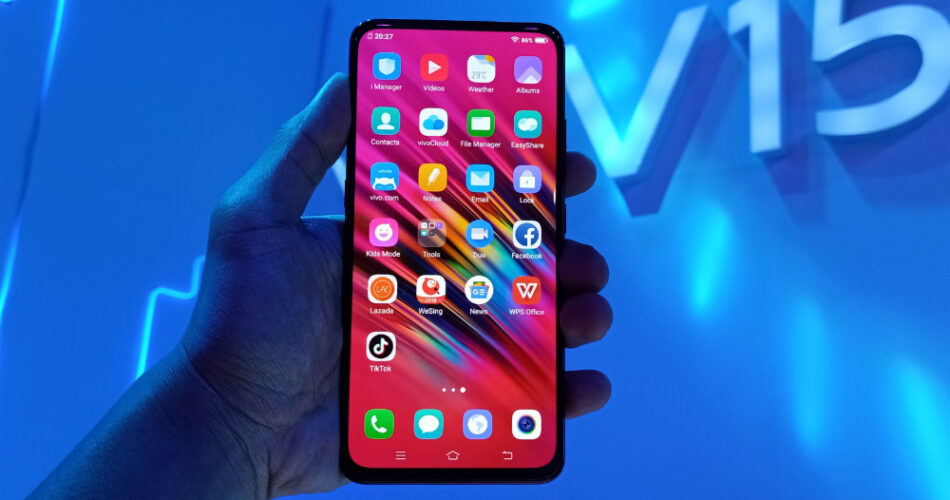
The Vivo V15 launched as a mid-range smartphone designed to bridge the gap between premium features and accessible pricing. With its debut mechanical pop-up selfie camera, 48-megapixel main sensor, and Super AMOLED display, it quickly gained market attention. As we move through 2026, many buyers and tech enthusiasts still evaluate whether the Vivo V15 remains a viable option for daily use. This comprehensive breakdown covers its specifications, real-world performance, software lifecycle, and current market relevance.
Design and Display Quality
The Vivo V15 features a 6.39-inch Super AMOLED panel with a 1080 x 2340 Full HD+ resolution. The edge-to-edge screen eliminates the traditional notch by housing the front camera in a motorized pop-up module that deploys in under one second. The gradient glass back and slim metallic frame provide a premium aesthetic, while the in-display optical fingerprint sensor delivers reliable biometric authentication. Despite newer smartphones adopting punch-hole or under-display camera designs, the V15’s uninterrupted display remains visually clean and highly usable for media consumption.
Camera System and Imaging Performance
Vivo positioned the V15 as a photography-focused device. The rear triple-camera array consists of a 48MP primary sensor with an f/1.8 aperture, an 8MP ultra-wide lens, and a 2MP depth sensor. Daylight photography delivers sharp details, accurate color science, and consistent dynamic range. Night mode improves low-light clarity through multi-frame stacking and AI noise reduction. The standout hardware is the 32MP pop-up front camera, which captures high-resolution selfies with portrait bokeh and AI beauty enhancements. Video recording maxes out at 1080p at 30fps, which remains adequate for casual vlogging and social sharing.
Performance, Hardware, and Gaming
Under the hood, the Vivo V15 runs on either the MediaTek Helio P70 or Qualcomm Snapdragon 675 chipset, depending on the regional variant. Both are paired with 6GB of LPDDR4X RAM and 128GB of UFS 2.1 storage, expandable via microSD. The processor handles everyday tasks smoothly, including multitasking, streaming, and navigation. Modern mobile games like Call of Duty Mobile or Genshin Impact run at medium graphics settings with occasional thermal throttling during extended sessions. The dual-channel memory architecture and optimized Funtouch OS ensure responsive app launches and smooth UI transitions.
Battery Life and Charging Speed
The 4000mAh battery delivers reliable all-day endurance with moderate usage. Average screen-on time ranges from six to seven hours, influenced by display brightness, network strength, and background app activity. The device supports 18W Dual-Engine fast charging, which restores the battery from zero to fifty percent in approximately forty minutes. While slower than contemporary 65W or 100W solutions, the V15’s power management remains efficient and stable for users who prioritize longevity over rapid top-ups.
Software, Updates, and 2026 Relevance
The Vivo V15 shipped with Android 9 Pie and received official updates up to Android 11 with Funtouch OS 11. Major OS upgrades and security patches have officially concluded, meaning the device no longer receives manufacturer-supported updates. In 2026, this limits compatibility with certain enterprise apps and newer security protocols. However, the phone continues to function reliably for communication, web browsing, media playback, and light productivity. Users seeking long-term software support should consider newer budget models, but the V15 remains a practical secondary device or entry-level smartphone.
Pros and Cons
Pros:
- Vibrant Super AMOLED display with true edge-to-edge viewing
- 48MP main camera with consistent daylight performance
- 32MP pop-up selfie camera for high-resolution portraits
- Reliable 4000mAh battery with optimized power management
- Affordable pricing in the refurbished and used smartphone market
Cons:
- Limited to Android 11 with no future security updates
- 18W charging speed is slow by 2026 standards
- Gaming performance struggles with modern high-demand titles
- Plastic mid-frame reduces long-term drop resistance
Conclusion
The Vivo V15 remains a historically significant mid-range smartphone that introduced mainstream buyers to pop-up camera technology and high-resolution selfie imaging. While it no longer competes with current flagships or modern budget powerhouses, it still delivers consistent performance for everyday tasks and media consumption. If you are purchasing a used or refurbished unit in 2026, verify battery health, display condition, and software functionality. For new buyers, the Vivo V15 serves best as a backup phone, student device, or cost-effective smartphone with a proven track record and strong camera capabilities.