
When Samsung launched the Galaxy S22 Ultra in early 2022, it redefined the premium Android experience by merging the Note series’ DNA with the S lineup. Fast forward to 2026, and the smartphone landscape has shifted dramatically with AI-driven features, thinner bezels, and next-gen chipsets. Yet, the S22 Ultra continues to hold a unique space in the market. Whether you’re buying refurbished, trading down from a newer model, or simply wondering if your current S22 Ultra still deserves a spot in your pocket, here’s a comprehensive 2026 perspective.
Design & Display: Timeless Premium Build
The S22 Ultra’s boxy silhouette, sharp corners, and integrated S Pen slot remain instantly recognizable. Crafted with an Armor Aluminum frame, Gorilla Glass Victus+ front/back, and IP68 dust/water resistance, it feels as premium today as it did on launch day. The 6.8-inch Dynamic AMOLED 2X display supports an adaptive 1–120Hz refresh rate, 1750 nits peak brightness, and WQHD+ resolution. In 2026, it still competes favorably with mid-range and older flagship panels, though newer LTPO optimizations and anti-reflective coatings on 2024–2026 flagships offer slight efficiency and glare improvements.
Performance & Software: Mature but Capable
Under the hood, the S22 Ultra runs on either the Snapdragon 8 Gen 1 or Exynos 2200 (region-dependent), paired with up to 12GB of RAM. While the 4nm process shows its age under sustained gaming or heavy multitasking, day-to-day navigation, social media, streaming, and productivity tasks remain buttery smooth.
By 2026, Samsung has likely reached the end of major OS upgrades for the S22 Ultra (typically 4 Android version updates), with the device running One UI 6.x or 7.x based on Android 14/15. Security patches continue through its 5-year lifecycle, but buyers should weigh the lack of future AI features and neural engine optimizations that power newer Samsung devices.
Camera System: Versatility That Ages Well
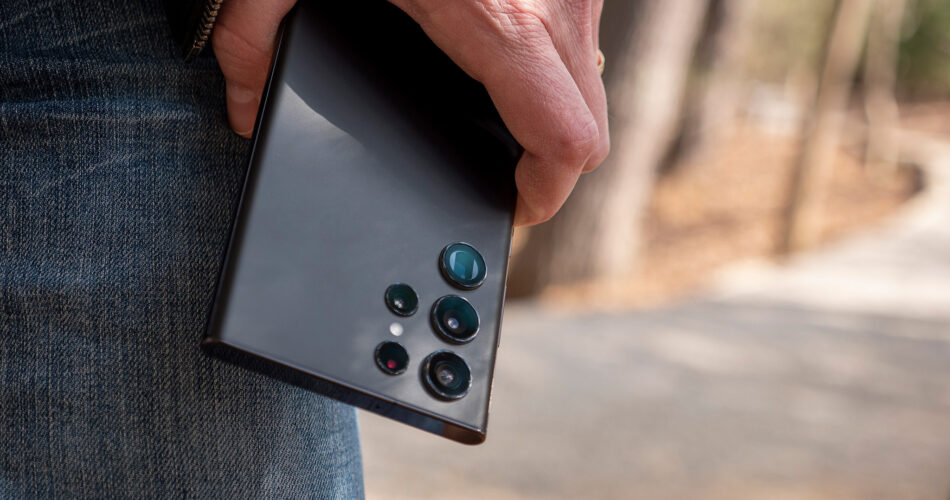
The quad-camera setup remains the S22 Ultra’s crown jewel:
- 108MP main sensor with large pixel binning
- 12MP ultrawide
- 10MP 3x optical telephoto
- 10MP 10x periscope zoom
Samsung’s computational photography has matured through years of updates, meaning even the 2022 hardware benefits from refined HDR, night mode, and portrait processing. The 100x Space Zoom is more of a novelty, but the 10x optical and 3x telephoto lenses still deliver industry-leading versatility for travel, concerts, and macro-style close-ups. Video recording tops out at 8K@24fps or 4K@60fps with solid stabilization, though newer models offer better low-light video and AI-powered subject tracking.
Battery, Charging & S Pen Integration
The 5,000mAh battery was class-leading at launch. In 2026, battery health varies significantly depending on usage cycles. Original owners may notice degradation, but a fresh replacement or well-maintained unit still comfortably lasts a full day with moderate use. Charging remains at 45W wired and 15W wireless, which is adequate but trails behind the 65W+ standards now common in 2025–2026 flagships.
The built-in S Pen continues to be the S22 Ultra’s standout differentiator. With ~2.8ms latency, Bluetooth remote gestures, and deep One UI integration for note-taking, sketching, and precision editing, it remains unmatched by stylus-compatible competitors.
The 2026 Verdict: Who Should Buy It Now?
The Galaxy S22 Ultra is no longer Samsung’s cutting-edge flagship, but it has gracefully transitioned into a value powerhouse. If you can find a certified refurbished or discounted unit in 2026, you’re getting a premium build, elite zoom cameras, and a fully integrated S Pen at a fraction of its original price. However, if you prioritize long-term software support, advanced on-device AI, peak efficiency, or cutting-edge video features, newer S23/S24/S25 series models or modern mid-rangers may offer better longevity.
For note-takers, photographers who love optical zoom flexibility, and buyers seeking flagship ergonomics without the flagship price tag, the S22 Ultra remains a remarkably competent choice in 2026.