
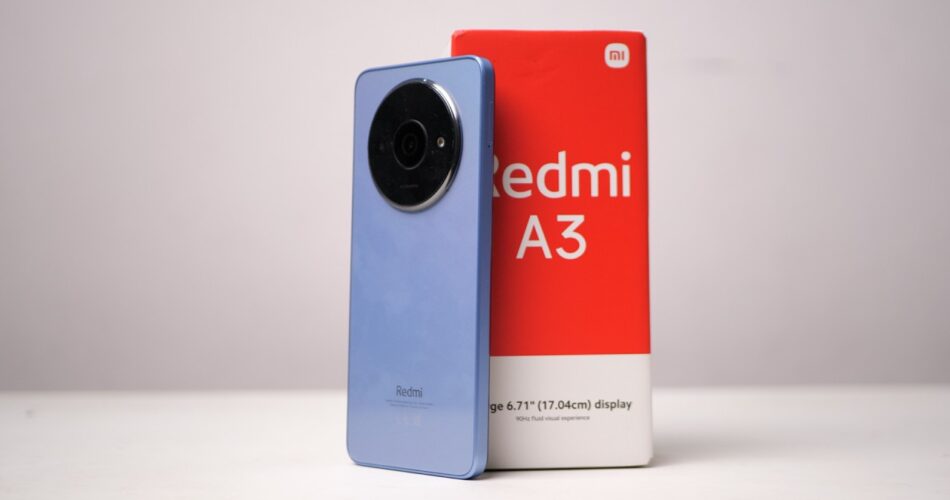
The Redmi A3 represents Xiaomi’s commitment to delivering essential smartphone features at an accessible price point. Launched in early 2024 and still relevant in 2026 for budget conscious buyers, this device combines a large 90Hz display, reliable MediaTek processing, and all day battery life. This comprehensive Redmi A3 review examines whether this entry level smartphone meets modern expectations for performance, camera quality, and daily usability.
Key Specifications Overview
Display: 6.71 inch IPS LCD, HD plus resolution 1650×720, 90Hz refresh rate, 500 nits brightness
Processor: MediaTek Helio G36, 12nm process, octa core CPU up to 2.2GHz
Memory: 3GB, 4GB, or 6GB LPDDR4X RAM with 64GB or 128GB eMMC 5.1 storage, expandable via microSD up to 1TB
Rear Camera: 8MP main sensor with f/2.0 aperture, auxiliary lens, HDR and portrait modes
Front Camera: 5MP selfie camera with f/2.2 aperture, portrait mode support
Battery: 5000mAh typical capacity with 10W wired charging via USB Type C
Software: Android 14 with MIUI skin, promised 2 major OS updates and 3 years of security patches
Security: Side mounted fingerprint sensor and AI powered face unlock
Connectivity: Dual 4G SIM, Wi Fi 2.4GHz and 5GHz, Bluetooth 5.4, GPS, GLONASS, Galileo, BeiDou, FM radio, 3.5mm audio jack
Dimensions and Weight: 168.4 x 76.3 x 8.3mm, 193 grams
Colors: Midnight Black, Forest Green, Star Blue
Design And Build Quality
The Redmi A3 adopts a modern aesthetic with a flat frame design and a distinctive circular camera module on the rear panel. The polycarbonate body feels sturdy for its price segment while keeping the device lightweight at 193 grams. The side mounted fingerprint sensor provides quick and reliable unlocking, complemented by AI face unlock for added convenience. With an IP rating not officially specified, users should exercise caution around moisture and dust exposure.
Display Performance
The 6.71 inch IPS LCD panel delivers HD plus resolution at 1650×720 pixels with a pixel density of 268 ppi. While not the sharpest display available, the 90Hz refresh rate ensures smoother scrolling and more responsive interactions compared to standard 60Hz screens in this category. The 500 nits peak brightness provides adequate visibility indoors, though outdoor use in direct sunlight may require manual brightness adjustment. Color reproduction is balanced for media consumption, and the inclusion of DC dimming helps reduce eye strain during extended viewing sessions.
Performance And Daily Usage
Powered by the MediaTek Helio G36 chipset built on a 12nm process, the Redmi A3 handles everyday tasks with competence. Social media browsing, messaging, video streaming, and light productivity apps run smoothly on the 3GB or 4GB RAM configurations. The 6GB RAM variant offers improved multitasking capability for users who keep multiple apps active. Gaming performance is modest; casual titles like Candy Crush or Subway Surfers run well, while demanding 3D games may require lowered graphics settings to maintain playable frame rates. The eMMC 5.1 storage provides acceptable app loading speeds, and the option to expand storage via microSD card adds practical flexibility.
Camera Capabilities
The rear camera system centers on an 8MP main sensor with an f/2.0 aperture. In well lit conditions, photos exhibit decent detail and natural color balance. The camera app includes useful modes such as HDR for high contrast scenes and portrait mode for subject isolation with background blur. Low light performance is limited by the sensor size and lack of optical image stabilization, resulting in softer images with visible noise. Video recording caps at 1080p resolution at 30 frames per second, suitable for social media sharing but not professional content creation. The 5MP front camera captures acceptable selfies for video calls and social platforms, with a soft light ring feature to improve visibility in dim environments.
Battery Life And Charging
The 5000mAh battery is a standout feature of the Redmi A3. Combined with the power efficient Helio G36 processor and optimized software, the device easily delivers a full day of moderate to heavy usage. Light users may extend usage to nearly two days on a single charge. The supported 10W charging speed is conservative by 2026 standards, requiring approximately two hours to fully recharge the battery from empty. While not the fastest charging solution available, it remains practical for overnight charging routines or opportunistic top ups during the day.
Software Experience And Updates
The Redmi A3 ships with Android 14 layered with Xiaomi’s MIUI interface. The software offers extensive customization options, gesture controls, and utility features such as app cloning and second space. Xiaomi has committed to providing two major Android version updates and three years of security patches for this model, which enhances long term value for budget buyers. As of 2026, the device should still be receiving security updates, though major OS upgrades may have concluded depending on the regional release timeline.
Connectivity And Additional Features
The Redmi A3 supports dual 4G SIM cards with VoLTE capability, ensuring reliable voice and data connectivity across networks. Wi Fi connectivity includes both 2.4GHz and 5GHz bands for flexible home and public network access. Bluetooth 5.4 provides stable connections to wireless audio devices and accessories. The inclusion of a 3.5mm headphone jack and FM radio support caters to users who prefer wired audio or local radio broadcasts. GPS with multi constellation support enables accurate navigation and location based services.
Pros And Cons
Pros Large 6.71 inch display with smooth 90Hz refresh rate Excellent 5000mAh battery life for all day usage Clean Android 14 experience with MIUI customization Side fingerprint sensor and face unlock for secure access Expandable storage support up to 1TB via microSD Affordable pricing for entry level smartphone segment 3.5mm headphone jack and FM radio for audio flexibility
Cons Modest 8MP rear camera with limited low light performance 10W charging speed feels slow compared to competitors HD plus resolution may appear less sharp on large display Helio G36 processor not ideal for intensive gaming or multitasking Plastic build may feel less premium than glass or metal alternatives
Who Should Buy The Redmi A3 In 2026
The Redmi A3 remains a sensible choice for first time smartphone buyers, students, seniors, or anyone seeking a reliable secondary device without significant investment. Its strengths lie in battery endurance, smooth display performance, and essential features delivered at an accessible price point. While camera capabilities and processing power have limitations, they align with expectations for the budget segment.
If your priorities include long battery life, a large screen for media consumption, and dependable daily performance, the Redmi A3 continues to offer compelling value in 2026. However, users requiring advanced photography, high end gaming, or premium build quality should consider stepping up to mid range alternatives. For its intended audience, the Redmi A3 fulfills its promise as an affordable, functional, and user friendly smartphone.