
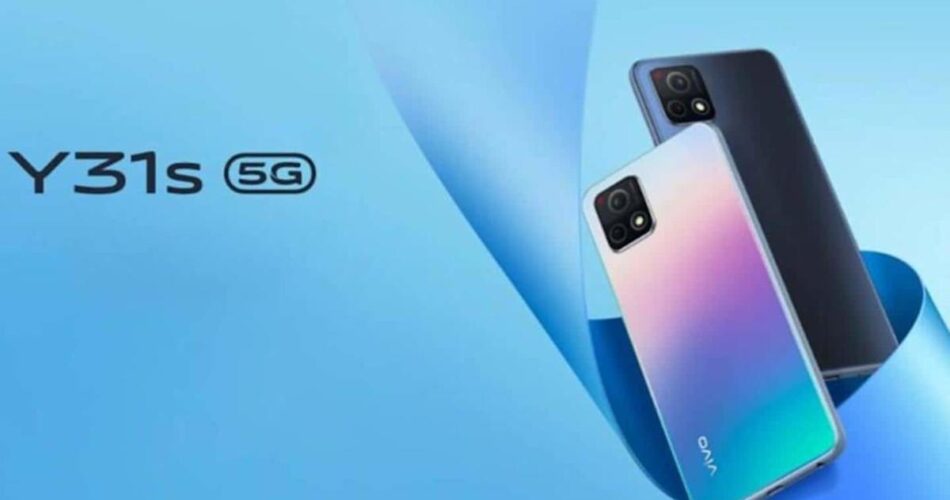
The Vivo Y31s remains a practical choice for users seeking an affordable 5G smartphone without compromising on essential features. Designed for everyday productivity, media consumption, and reliable connectivity, this device balances hardware efficiency with a user-friendly interface. Below is a comprehensive breakdown of its capabilities, performance metrics, and real-world usability.
Design and Display
The Vivo Y31s features a 6.58-inch FHD+ LCD panel with a 2408×1080 resolution and a 90Hz refresh rate. The higher refresh rate delivers smoother scrolling and responsive touch input, which is noticeable in daily navigation and light gaming. The screen is protected by standard Gorilla Glass, and the bezels are moderately slim, maintaining a clean front profile.
The chassis is constructed from polycarbonate with a matte finish that resists fingerprints. Weighing approximately 186 grams, it sits comfortably in hand and slips easily into pockets. A side-mounted fingerprint sensor doubles as the power button, offering fast and consistent authentication. The inclusion of a 3.5mm headphone jack and a dedicated microSD slot adds practical value for budget-conscious buyers.
Performance and Software
Under the hood, the Vivo Y31s is powered by the Qualcomm Snapdragon 480 5G processor, built on an 8nm architecture. This chipset integrates the X51 5G modem, ensuring sub-6GHz connectivity across supported regions. The phone typically ships with 4GB or 6GB of LPDDR4X RAM and 64GB or 128GB of UFS 2.1 storage, both expandable via hybrid SIM tray.
The device runs Funtouch OS based on Android. While initial launch versions shipped with Android 11, later regional updates have brought Android 12 and 13 compatibility depending on the market. The software emphasizes clean navigation, app cloning, game mode optimization, and battery management tools. Day-to-day multitasking remains smooth, though heavy applications may require moderate settings for consistent frame rates.
Camera System
The rear camera module consists of a triple setup: a 13-megapixel primary sensor with f/2.2 aperture, a 2-megapixel macro lens, and a 2-megapixel depth sensor. The main camera delivers well-exposed photos in daylight with accurate color reproduction. Portrait mode benefits from the depth sensor, creating natural edge detection in good lighting. Low-light performance relies on Night mode, which reduces noise but requires steady handling or a tripod for optimal results.
The front camera features an 8-megapixel sensor optimized for video calls and social media content. It supports face beauty filters, HDR, and portrait background blur. Video recording caps at 1080p at 30fps on both front and rear cameras, with electronic image stabilization applied for smoother handheld footage.
Battery Life and Charging
A 5000mAh lithium-polymer battery serves as the foundation for all-day usage. With the 90Hz display and Snapdragon 480 efficiency, light to moderate users can easily stretch the charge across 1.5 days. Screen-on time typically ranges between 6 to 7 hours depending on brightness, network usage, and background activity.
The device supports 18W fast charging via USB Type-C. A full charge takes approximately 2 hours and 15 minutes from zero. The charger is included in the box, and adaptive charging algorithms help extend long-term battery health by regulating voltage during peak cycles.
Price and Availability
The Vivo Y31s targets the entry-level 5G segment. Pricing varies by region and storage variant, but it consistently undercuts mid-range competitors while offering comparable core specifications. It is available through official Vivo retailers, authorized electronics stores, and major e-commerce platforms. Regional promotions and trade-in programs frequently reduce the final purchase price.
Pros and Cons
Pros:
- Reliable 5G connectivity with Snapdragon 480 5G
- 5000mAh battery delivers consistent all-day performance
- 90Hz FHD+ display enhances scrolling and media viewing
- Side-mounted fingerprint sensor for quick access
- Expandable storage and dedicated 3.5mm audio jack
- Competitive pricing in the budget smartphone category
Cons:
- Camera system struggles in low-light conditions
- 18W charging lags behind modern fast-charging standards
- Plastic build lacks premium tactile feel
- Limited RAM options may affect heavy multitasking
- Software update timeline varies by region
Final Verdict
The Vivo Y31s succeeds as a dependable entry-level 5G smartphone. It prioritizes battery endurance, display smoothness, and stable network performance over flagship-tier features. Users seeking a primary device for communication, navigation, streaming, and light productivity will find it delivers consistent value. While camera limitations and slower charging prevent it from competing with mid-range alternatives, the Y31s remains a logical purchase for budget-focused buyers in 2026.
Frequently Asked Questions
Does the Vivo Y31s support 5G networks? Yes, it features the Snapdragon 480 5G chipset with integrated X51 modem, supporting sub-6GHz bands across compatible carriers.
Can I expand the storage on the Vivo Y31s? Yes, it supports microSD cards up to 1TB via a hybrid SIM tray configuration.
Is the Vivo Y31s water-resistant? It does not carry an official IP rating. Basic splash resistance is present, but submersion or heavy rain exposure should be avoided.
What charging speed does the Vivo Y31s support? The device ships with 18W wired fast charging and includes the compatible charger in the box.
Will the Vivo Y31s receive Android updates in 2026? Security patches and minor optimizations continue in supported regions, but major Android version upgrades depend on local carrier and Vivo rollout schedules.